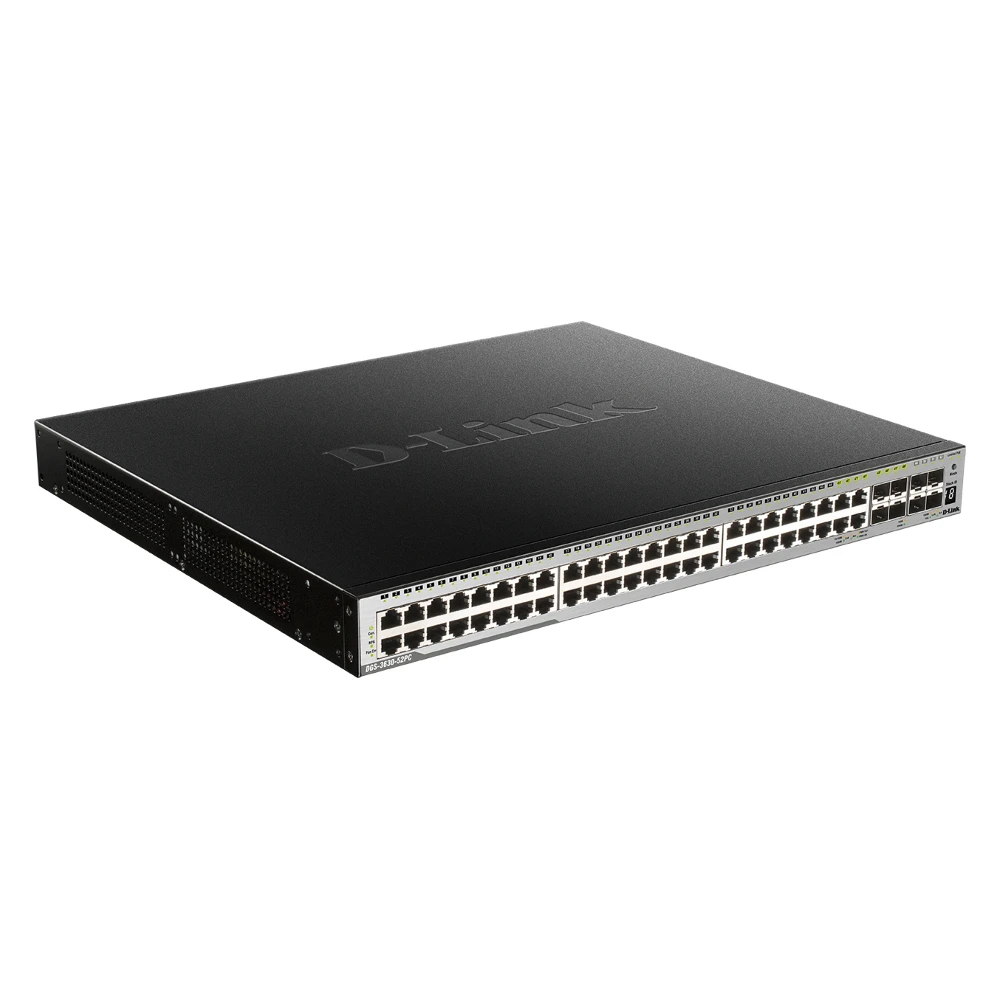
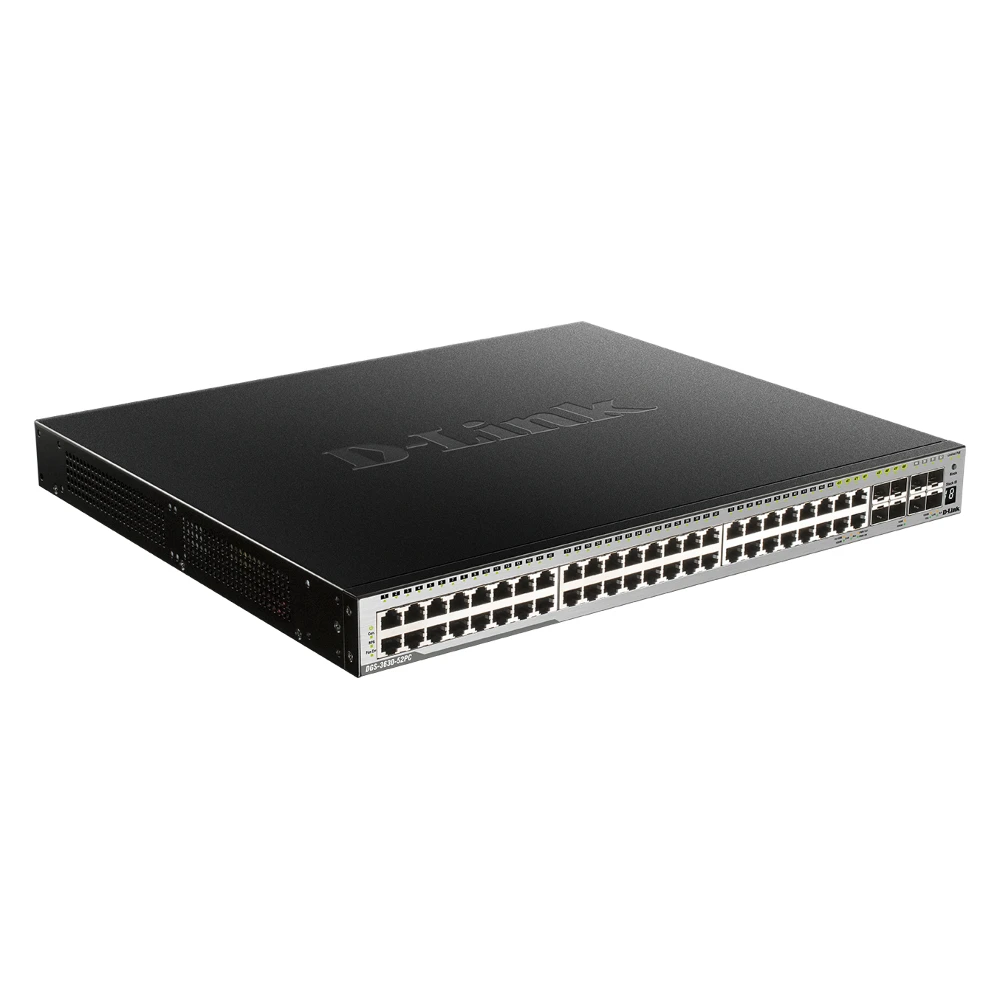
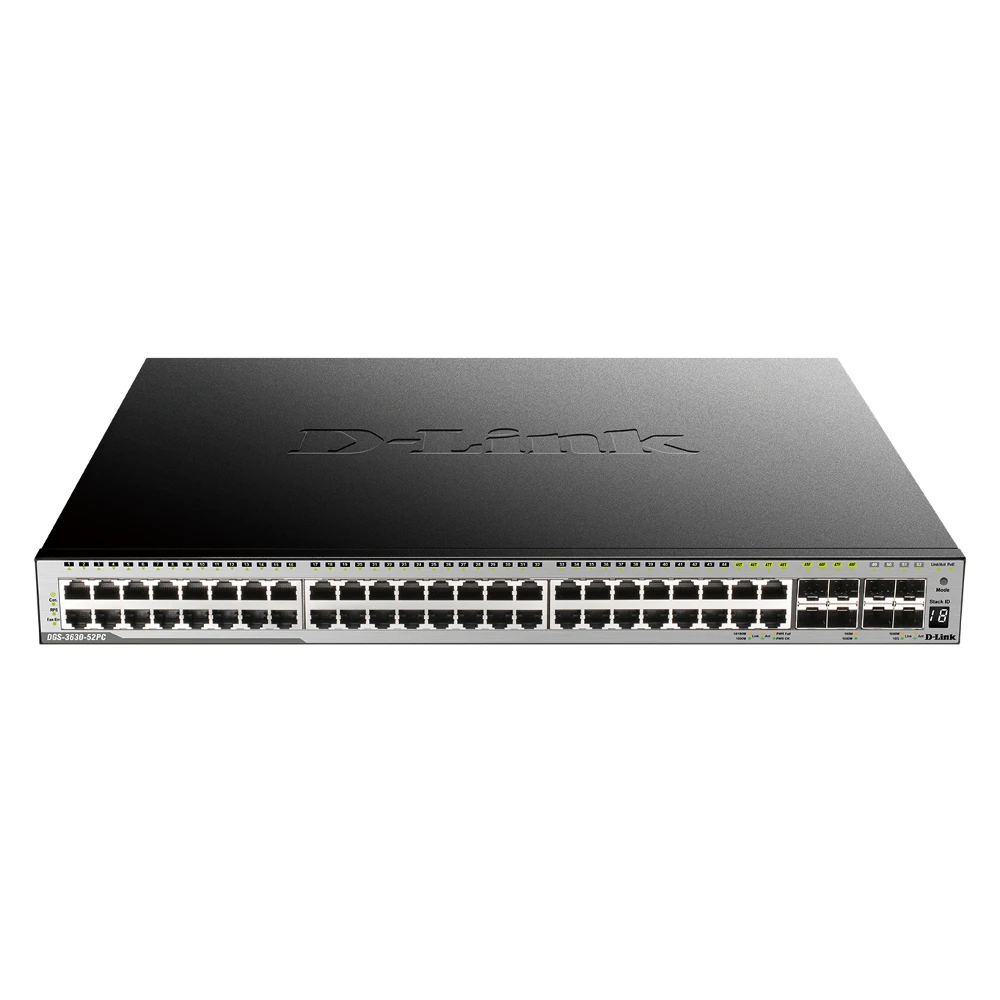
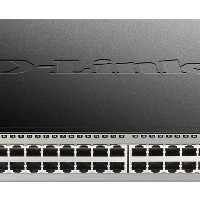
48x 1G RJ-45, 4x 10G SFP+, 176 Gbps, PoE, VLAN, 441 x 380 x 44 mm
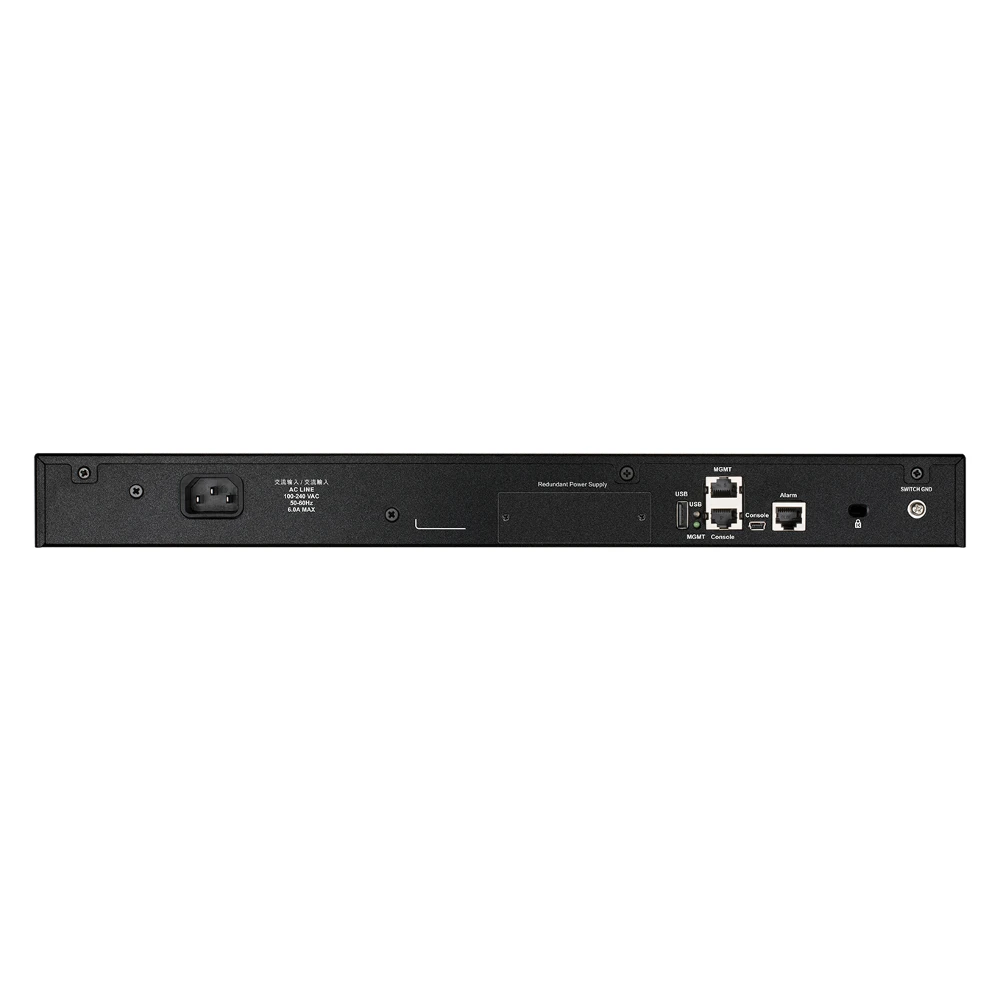
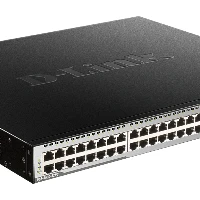
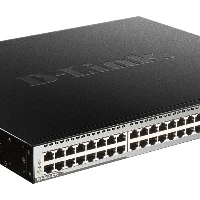
D-Link DGS-3630-52PC/SI - 48 port Gigabit PoE Layer 3 Stackable Managed Gigabit (370w). Switch type: Managed, Switch layer: L3. Basic switching RJ-45 Ethernet ports type: Gigabit Ethernet (10/100/1000), Basic switching RJ-45 Ethernet ports quantity: 48, USB 2.0 ports quantity: 1, Console port: RJ-45/Mini-USB. Full duplex. MAC address table: 68000 entries, Switching capacity: 176 Gbit/s. Networking standards: IEEE 802.1AX, IEEE 802.1D, IEEE 802.1Qbb, IEEE 802.1ag, IEEE 802.1p, IEEE 802.1s, IEEE 802.1w,.... Power over Ethernet (PoE). Rack mounting
Outperforming the competition
The DGS-3630-28TC was benchmarked against a market leading competitor's device. It matched or exceeded the competitor's performance across all tests despite being significantly lower in price with a much lower power consumption.
Versatile Management
The DGS-3630 Series provides:
- Network Assistant Utility
- Industry-standard CLI
- Intuitive web-based management interface
Support for SNMP allows centralized management of a large number of devices and out-of-band management is available via a dedicated console port.
A mini-USB console port allows the DGS-3630 Series to be managed without any extra connectors, and a USB Type A port can be used to store logs, configuration, and firmware images.
High Availability and Flexibility
Includes stacking technology, which allows multiple switches to be combined to form a single physical or virtual stack.
Scale your network using just a stacking cable and without the need for stacking modules.
Increased redundancy over multiple physical units, simplifies management and provides a single IP address to manage all members in the stack.
Security, Performance & Availability
Robust set of QoS features helps ensure that critical network services such as Voice over IP and video conferencing are given high priority through the network.
The D-Link Safeguard Engine increases the switch’s reliability, serviceability, and availability by preventing malicious flooding traffic caused by worms or virus attacks.


 Italiano